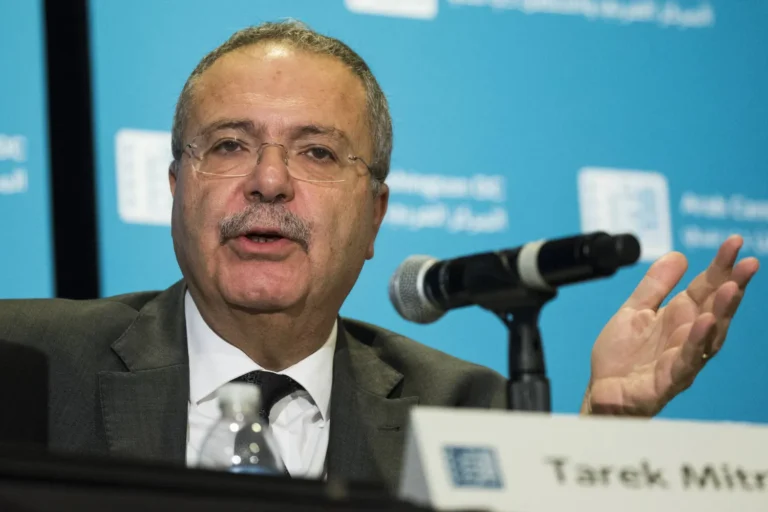
Beirut, Lebanon – Lebanese Deputy Prime Minister Tarek Mitri outlined a realistic yet complex roadmap for the future of the Lebanese state. He revealed significant field and political developments during the opening session of the eighth annual Carnegie Middle East Center conference.
In a discussion moderated by the center’s director, Maha Yahya, Mitri addressed a series of issues, including Hezbollah’s weapons. He also discussed relations with Syria and the structural challenges facing Prime Minister Nawaf Salam’s government.
The move towards “North Litani”: The army’s five-year plan
In his most prominent field statements, Metri affirmed that the military institution is nearing the completion of its tasks in the current phase. He referred to the five-stage plan, explaining that the army commander had proposed a comprehensive plan beginning with strengthening capabilities and culminating in the full extension of state authority.
Metri confirmed that the Lebanese army is ready to move to the second phase of disarming the population. This phase has no specific timeline, but it will extend geographically to the Awali River.
He noted gradual progress in the area south of the Litani River, considering the army’s credibility to be the fundamental pillar upon which the international community relies.
Nawaf Salam’s government: Great ambitions and “structural” obstacles
Metri frankly addressed the current government’s political trajectory, noting that it has been under extremely high expectations since its inception. However, it has encountered structural obstacles and fragmentation within state institutions, the source of which is well-known. It has also faced external pressures and political (and non-political) resistance to the reform process.
He affirmed that work is underway to pass the “Gap Law” soon, which will outline the path for financial reform and engagement with international organizations.
He added, “The majority of Lebanese aspire to reform and the fight against corruption. This is a commitment we will not back down from, despite the slow progress.”
Reconstruction and refugee conditions
The Deputy Prime Minister stressed that the international community is firm in its conditions: “Establishing state authority is the only way to secure financial support and reconstruction.”
Regarding the Syrian refugee issue, he indicated that further returns are expected soon. He also emphasized the need to regulate work and residency conditions in a way that balances Lebanese sovereignty with the needs of the economy, in an effort to end the current fragmented approach. The goal is to move towards building full trust with international organizations.