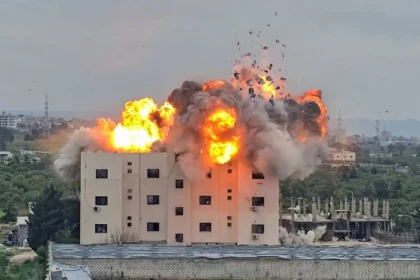
Tel Aviv, Israel – Senior Israeli military officials warned lawmakers in the Knesset, the Israeli parliament, that the Islamic Republic of Iran has resumed large-scale ballistic missile production. This comes nearly six months after the 12-day war.
The Israeli news site Ynet reported that an Israeli military representative announced at a closed-door meeting of the Knesset’s Foreign Affairs and Defense Committee that the Iranian government is working rapidly to rebuild its missile capabilities, which were severely damaged during the recent confrontation with Israel.
Iranian arms race
The warning comes as Tehran announced on Friday, December 5, that the Revolutionary Guard had used ballistic missiles, cruise missiles, and drones in a large-scale naval exercise in the Persian Gulf.
Regional intelligence assessments and Western diplomats indicate that the Islamic Republic’s “top priority” is reviving its ballistic missile program, following Israel’s earlier destruction of its “planetary mixers” (missile production equipment). Iran is believed to have begun producing missiles using older methods and intends to launch between 500 and 1,000 missiles simultaneously in any future conflict.
Israeli-American joint military exercises
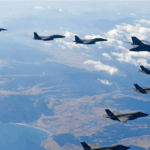
In contrast, the United States and Israel began their annual joint naval exercises, with the participation of the Israeli Navy and the US Navy’s Fifth Fleet.
The Israeli army confirmed that the goal of the exercises is “to enhance strategic and operational cooperation between the two navies and to train to confront various regional threats.”
These maneuvers come shortly after naval exercises conducted by the Iranian Revolutionary Guard in the Persian Gulf, the Gulf of Oman, and the Strait of Hormuz. Tehran declared that its exercises were “a demonstration of active presence and a warning to foreign fleets.” During these exercises, the commander of the Revolutionary Guard’s naval forces also announced the testing of a new missile with a range exceeding the length of the Persian Gulf.
Concerns about misjudgment
The Israeli newspaper Yedioth Ahronoth quoted diplomats as saying that this situation increases the “risk of miscalculation.” Although Israel has conveyed messages through Western intermediaries indicating that it does not want another direct conflict, Tehran has dismissed these messages as deceptive.