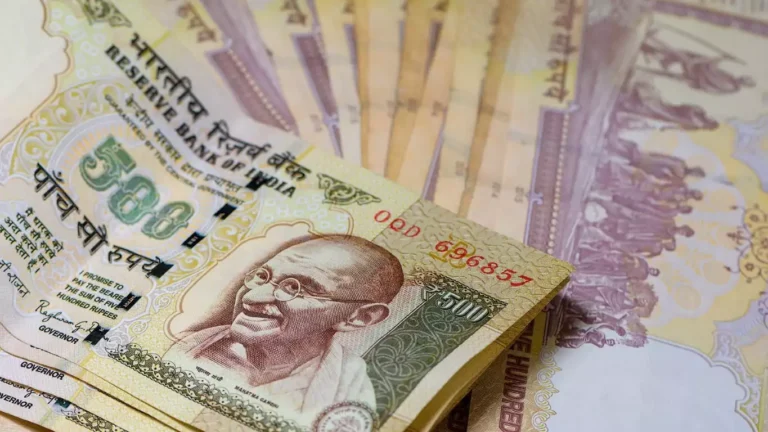
New Delhi, India – The Indian rupee hit a new record low, impacted by declining capital inflows and the freezing of trade talks between India and the United States.
This is despite the release of strong economic growth data that exceeded expectations.
This decline comes at a time when investors are experiencing uncertainty
about the future course of trade relations between the two countries.
This is in addition to external pressures related to the strength of the dollar globally.
Weak investment flows
According to currency market traders, weak foreign investment flows
in recent weeks have put significant pressure on the rupee.
With increased demand for dollars from financial institutions and importers,
This caused the Indian currency to break through support levels
that were considered sensitive by the Reserve Bank of India.
Despite New Delhi announcing its fastest quarterly economic growth in years,
this positive data failed to calm market fears.
Especially after trade talks with Washington faltered,
talks which were expected to pave the way for broader economic cooperation
and attract huge investments.
The stalled negotiations have reignited the pressure.
Analysts confirm that markets were expecting progress in the US-India negotiations.
This would have given a strong boost to the rupee
and strengthened investor confidence,
but the current stalemate has brought the pressure back again.
Financial experts, for their part, believe that the Reserve Bank of India may resort to market intervention.
This is limited in scope to prevent a further sharp decline.
However, the overall trend will remain linked to external factors,
most notably the movements of the dollar and the directions of the Federal Reserve.
Likewise, the level of demand for Asian assets amid the global economic slowdown.
Continuation of blurring
Observers point out that the uncertainty surrounding trade with the United States continues.
This could add further pressure to the rupee in the near term.
This is despite the fact that the fundamentals of the Indian economy remain strong,
supported by high growth and increased government spending.
Thus, the rupee remains caught between two opposing forces:
strong growth data supporting it, and a stressful external
and business environment pushing it towards further decline.