Tehran, Iran – The wave of educational closures in Iran expanded to unprecedented levels on Sunday, exacerbated by worsening air pollution and a flu outbreak in several provinces. This prompted emergency task forces across the country to suspend in-person classes at schools and universities on a large scale.
In Tehran province, the Air Pollution Emergency Task Force announced that in-person classes would continue on November 29 and 30. The districts of Malard, Rabat Karim, Dammond, Firuzkuh, and Pardis were exempted and switched to distance learning. Executive authorities also ordered that employee attendance be reduced to one-third, and most employees were required to work remotely.
The capital also saw a series of strict restrictions, including a ban on trucks, and the closure of parks, cinemas, amusement parks, sports halls, and gathering places. All indoor and outdoor sporting and cultural events were also suspended.
In East Azerbaijan, all educational levels in Tabriz, Osko, Bonab, Azarshahr, Ajabshir, and Shabestar were switched to distance learning. In West Azerbaijan, classes were completely suspended in Urmia, Mahabad, Naqadeh, and Piranshahr. In contrast, only primary schools were closed in Khoy, Miandoab, and Bukan.
In Alborz, all schools and universities were closed. It was decided that classes would resume with only 25% of staff present. Isfahan also closed all classrooms due to the simultaneous outbreak of pollution and influenza. It switched to online learning via the “Shad” platform, a measure also adopted by Bushehr province.
Kermanshah witnessed a complete closure of all educational institutions, both morning and evening. Maternity workers were permitted to work remotely under certain conditions. In Hamadan, schools and universities were closed on November 29 and 30. Khuzestan announced the suspension of in-person classes on Sunday. Primary school centers in Arak, Saveh, Shazand, Mohajeran, and several villages were also closed.
Reports indicate that dozens of other cities have made similar decisions through their local crisis councils. This makes this wave of lockdowns one of the most widespread in recent years.
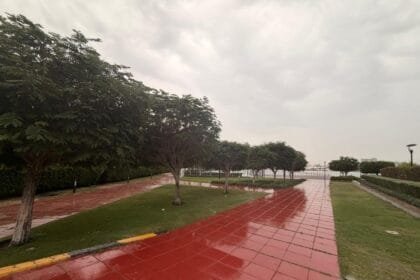
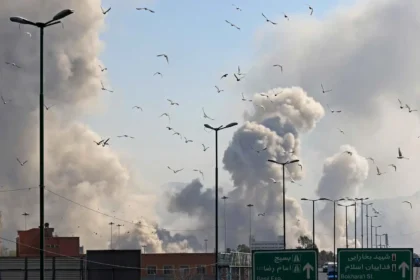
Environmental experts confirmed that the current crisis reflects deteriorating air quality. This resulted from a combination of factors, most notably polluting fuels, aging transport fleets, weak monsoon winds, and poor environmental management. Experts warned that school closures are no longer an exception but have become a recurring norm every winter.
With the healthcare system under increasing pressure and respiratory illnesses on the rise, coupled with the negative impact on education, millions of families are living in a state of anxiety. The question is repeated every night: “Will schools open tomorrow?”