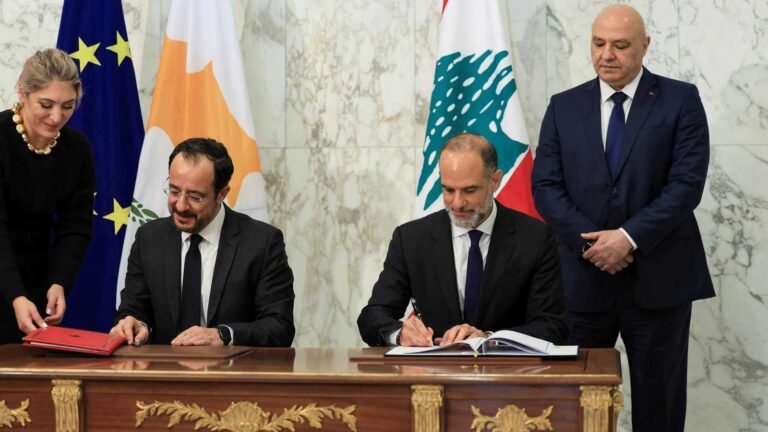

Beirut, Lebanon – Lebanon and Cyprus signed a maritime border demarcation agreement on Wednesday, a historic step that paves the way for energy cooperation in the Eastern Mediterranean. The agreement aims to establish a clear legal framework for offshore exploration and exploitation of natural resources between the two countries.
The signing ceremony was attended by Lebanese President Joseph Aoun and Cypriot President Nikos Christodoulides. They emphasized the importance of the agreement in strengthening bilateral cooperation and opening new horizons in the energy sector, thus serving the economic interests of both countries.
This agreement comes after decades of stagnation since the initial agreement between Lebanon and Cyprus in 2007. It was not ratified by the Lebanese parliament due to regional disputes, and the two sides are now working to overcome legal and technical obstacles before potential gas and oil exploration can begin.
The demarcation of maritime borders is a significant step for Lebanon, which hopes that offshore resources will contribute to its economic recovery. This comes amidst the considerable economic challenges it faces. The agreement also presents an opportunity for Cyprus to expand its energy investments. This will help it leverage its expertise in natural gas exploration in the Mediterranean, enabling it to strengthen its role as an alternative energy supplier to Europe.
The Lebanese president emphasized that the agreement is not directed against any party, but rather aims to promote peace and development in the region. It also protects Lebanon’s maritime sovereignty. He commended the country’s commitment to international law in managing its maritime resources. For his part, the Cypriot president described the agreement as a “beacon of hope” for regional cooperation in the energy sector. He affirmed that the sea serves as a bridge for cooperation, not a barrier between nations.
This move opens the door for international companies to invest in oil and gas exploration projects in the region. This could contribute to economic surpluses. It also enhances the stability of the energy sector in the Eastern Mediterranean in the medium and long term.