Tehran, Iran – Iran has announced its readiness to resume nuclear talks with the United States. However, it stipulated that Washington must commit to “mutual respect and equal standing.” This reaffirms its adherence to the conditions it held before the recent US and Israeli attacks.
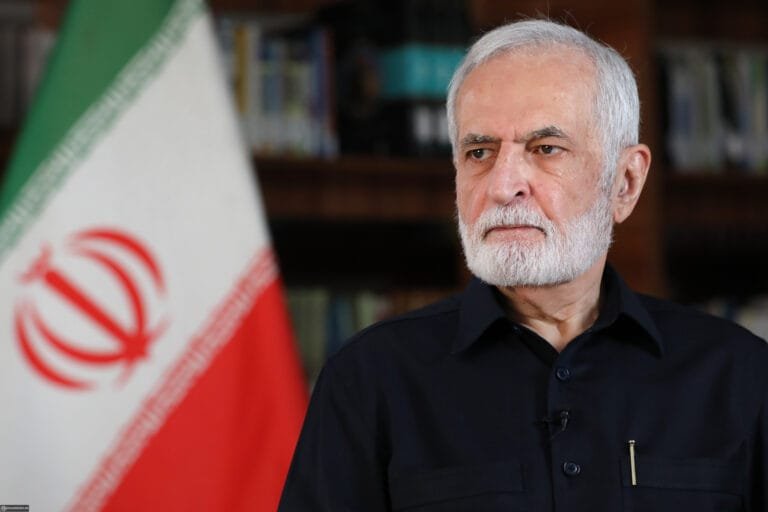
In an exclusive interview with CNN published Wednesday, Kamal Kharrazi, head of the Islamic Republic’s Strategic Council on Foreign Relations, stated that Tehran is ready to return to negotiations, but only on the condition that Washington acts “respectfully.”
Iran’s non-negotiable conditions: Kharrazi stressed that Iran’s pre-Twelve Day War conditions would not change, emphasizing that the focus of any potential dialogue should be limited to the nuclear issue alone.
Kharrazi also emphasized crucial points, stating that Iran would continue uranium enrichment to provide fuel for power plants and for medical purposes. He stressed that Tehran’s missile program, which he described as “expanding,” would not be part of the negotiations.
He said that the dialogue should have its content and negotiation process defined in advance. The interaction between the two sides should be based on “mutual respect and equal standing.”
In commenting on the American position, Kharrazi criticized President Donald Trump, saying: “Unfortunately, the American president does not believe in diplomatic dialogue. He prefers to use force to achieve his goals.”
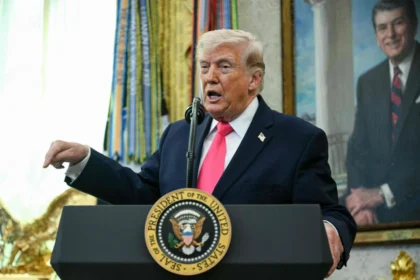
Trump sees Tehran as “very eager” for a deal. In contrast, US President Donald Trump’s remarks reflected a strong Iranian desire to reach an agreement. Trump stated this during a joint press conference with Saudi Crown Prince Mohammed bin Salman. He affirmed that the Islamic Republic is “very eager to reach an agreement.” He added, “We are talking to them.”
Conflicting assessments of the damage and the content of the negotiations: Kharazi indicated that, nearly five months after the attacks, the full extent of the damage to the nuclear facilities has still not been assessed. This follows previous conflicting statements.
Earlier, Iranian Foreign Minister Abbas Araqchi announced that enrichment had stopped “for the time being” due to the targeting of facilities.
Iranian Deputy Foreign Minister Saeed Khatibzadeh told CNN that Iran’s nuclear program remains “intact” despite “serious” damage to infrastructure and machinery.
While Kharrazi insists that the dialogue is limited to the nuclear issue, Reuters quoted a well-informed Iranian official last May as saying that the negotiations between Tehran and Washington are not limited to the nuclear program, but also include the missile program.
It is worth noting that Washington had previously demanded a complete halt to enrichment in talks, while Tehran insisted on continuing domestic enrichment to a level unsuitable for producing a nuclear weapon.