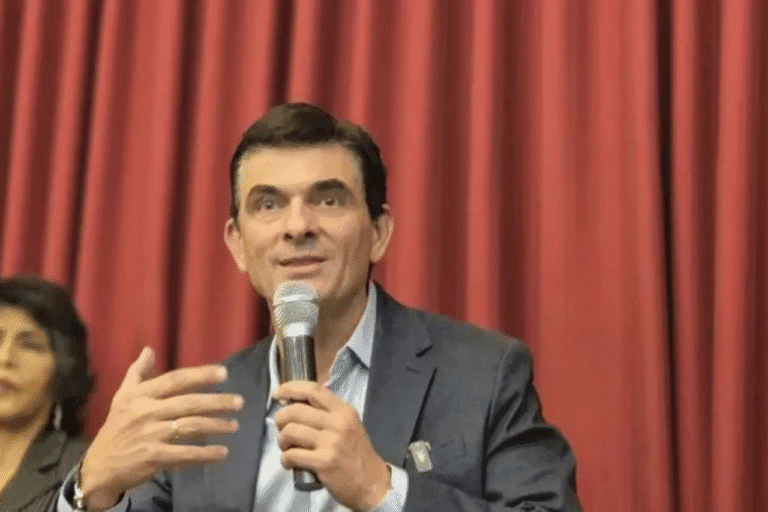
Bolivia – The Bolivian political landscape is undergoing a historic transformation today with the inauguration of Rodrigo Paz Pereira and Idman Lara as the country’s new president and vice president.
This event is a watershed moment.
Paz becomes the first president elected at the ballot box since 2006. He does not belong to the Movement for Socialism (MAS) party, which was founded by Evo Morales.
End of an era and beginning of a conservative era
The arrival of Paz Pereira to power, a shift described as “conservative,” represents a turning point celebrated not only by the internal opposition.
Morales is being blamed for restricting freedoms, not only by the regional capitals that have declared their willingness to provide support and aid to boost growth, but also by many of them.
Resuming relations with the United States
Bolivia’s new strategic positioning will be evident in the announcement of the resumption of relations with the United States, which were severed in 2009.
In an interview with CNN en Español, Paz Pereira explained that “our condition for relations is based on democracy,” emphasizing that Bolivia is “a democratic country.”
immediate government formation
In a move breaking with tradition, Paz Pereira is expected to swear in his ministers immediately after the official announcement. This is intended to ensure greater efficiency in the new government’s work.
At least 45 delegations have confirmed their attendance at the inauguration ceremony. This participation from various countries and international organizations reflects Bolivia’s new direction. Among them are Argentine President Javier Malé, Chilean President Gabriel Burriguez, Paraguayan President Santiago Peña, and Ecuadorian President Daniel Noboa.
US Deputy Secretary of State Christopher Landau, Brazilian Vice President Geraldo Alckmin, and Peruvian Prime Minister Ernesto Alvarez.
Outgoing President Luis Mabel will not attend. The presidents of Venezuela (Nicolás Maduro), Cuba (Miguel Díaz-Canel), and Nicaragua (Daniel Ortega and Rosario Murillo) will also be absent as they were not invited.
The ceremony was notably absent of prominent figures in Bolivia’s recent political history. Morales declined the invitation, acknowledging economic “mistakes” stemming from “rivalry” within his own party, which had recently expelled him on charges of embezzlement.