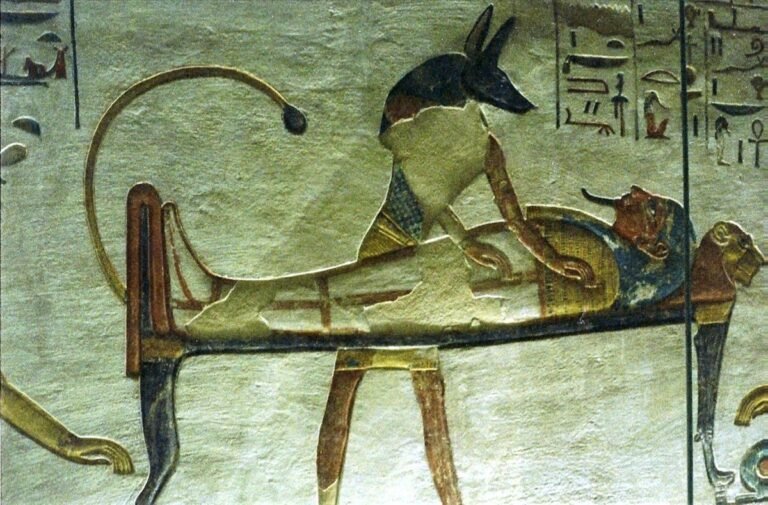
Cairo, Egypt – The mystery of mummification continues to assert itself as one of the most intriguing topics in scientific and archaeological circles, especially with modern studies revealing the unparalleled ingenuity of ancient Egyptians in preserving human remains. This sophisticated funerary art was intrinsically linked to religious beliefs regarding “resurrection and immortality,” where preserving the physical form was a fundamental prerequisite for the soul’s journey into the afterlife. Accordingly, the secrets of Ancient Egyptian mummification provide fertile ground for debate between science and myth, amid ongoing questions about the existence of unknown techniques whose full details remain undiscovered to this day.
The Chemistry of Mummification: Preservation Stages, Resins, and Salts
Archaeological research indicates that mummification was not merely a religious ritual but a complex “applied science” involving precise stages. It began with the removal of internal organs and drying the body using natron salt, followed by the application of aromatic oils and resins to prevent bacterial decay. Obviously, the precision in wrapping bodies in linen and the inclusion of magical amulets reflects a unique blend of chemistry and spirituality. As a result, these mummies have withstood thousands of years, defying time and climate, placing ancient science in a position of continuous global admiration.
Mummification Grades and Modern Tech: Are There Still Missing Secrets?
Some modern studies suggest that the variation in mummification quality between kings, nobles, and commoners indicates varying levels of knowledge and techniques; some may have been secret and undocumented in lost texts. Certainly, the use of CT scans and 3D imaging has contributed to a deeper understanding of the ancestors’ health conditions; however, questions persist regarding “missing materials” that left no clear chemical trace. Accordingly, the secrets of Ancient Egyptian mummification remain a renewed mystery, merging confirmed scientific discoveries with archaeological interpretations that open the door to further wonder and