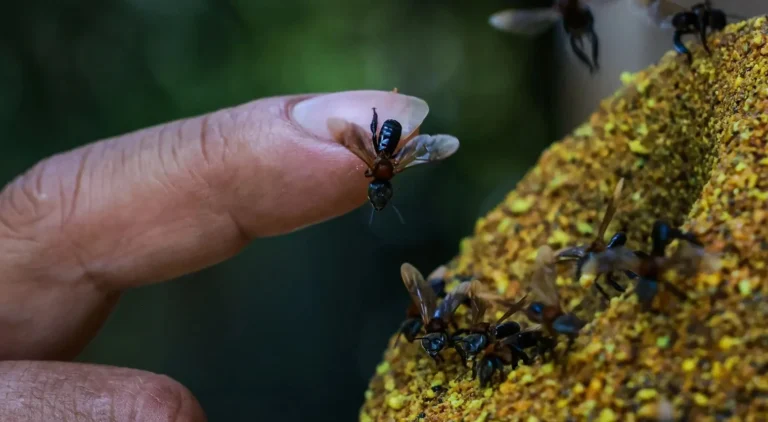
Lima, Peru – Peruvian authorities have announced a new legal framework granting stingless bees legal protection and rights for the first time within the Amazon rainforest. This unprecedented environmental move aims to conserve biodiversity and support local ecosystems that rely heavily on natural pollination.
Stingless bees are among the most important pollinators in the Amazon, contributing to the pollination of hundreds of plant species, including crops upon which indigenous communities depend for food and livelihoods. Under the new legislation, these bees are now legally protected. The law also regulates honey harvesting and beekeeping practices, and prohibits damage to their natural habitats or illegal trafficking.
The Peruvian Ministry of the Environment explained that the law imposes strict standards for protecting bee habitats. It encourages local communities to adopt sustainable traditional beekeeping practices. This strikes a balance between environmental conservation and improving rural incomes. The law also mandates research programs to monitor bee populations and the impact of climate change and deforestation on their survival.
International environmental organizations welcomed the move, considering it a model that could be replicated in other Amazonian countries, especially given the global decline in pollinator populations. Experts affirmed that the legal recognition of small, influential organisms, such as stingless bees, reflects a shift in environmental policies. This shift moves from protecting only large species to protecting entire ecosystems.
This decision comes at a time when the Amazon rainforest is facing increasing pressure due to deforestation and agricultural expansion, making pollinator protection a crucial element. This contributes to maintaining the ecosystem’s balance and long-term sustainability.