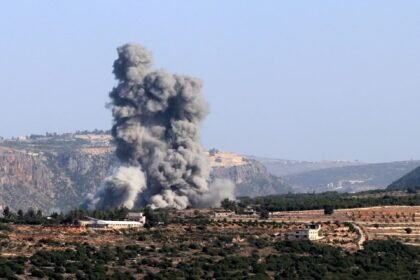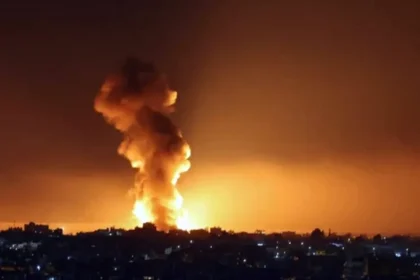
Exclusive, Voice of the Emirates – In a scene that held the breath of radar observers and intelligence analysts worldwide, US elite forces carried out a complex air-ground “extraction” of a US weapons systems officer (colonel) from the heart of the rugged terrain of the Iranian mountains. This incident, which began with the downing of an F-15E Strike Eagle fighter jet by an Iranian missile and ended with what President Trump described as an “Easter miracle,” cannot be interpreted as an isolated field event. Rather, it is a strategic “probe” revealing a radical shift in US combat doctrine toward Tehran, and it raises the most important question: Has Washington begun a phase of “probing” in preparation for a ground invasion?
A show of force on hostile territory
The rescue operation was more than just the recovery of a trapped pilot; it was a massive military demonstration of American “operational supremacy” deep inside Iranian territory. While Revolutionary Guard forces surrounded the area, Black Hawk helicopters, supported by A-10 Warthog aircraft, launched sweeping raids that decimated advancing Iranian convoys.
Notably, C-130 cargo planes landed to unload supplies on Iranian soil, and disabled aircraft were destroyed in place to prevent their equipment from falling into enemy hands.
This level of direct engagement, which included the deployment of SEAL Team Six, marked a significant precedent. It was the first time in decades that American troops had set foot on Iranian soil, signifying that the operational plan for Operation Epic Fury had moved beyond remote airstrikes to a strategy of “temporary territorial control.”
Conflict of Narratives
The incident provided both sides with ample fodder for psychological warfare:
Washington: President Trump exploited the event to reinforce his image as a “protective father” who does not leave his soldiers behind enemy lines, a message aimed at the American public and intended to boost the morale of the armed forces.
Tehran: In contrast, Iranian media broadcast footage of the aircraft wreckage, attempting to portray the country as capable of shattering the “myth of American air superiority” and forcing the superpower into a war of attrition over its mountains.
Are we witnessing a “rehearsal” for a ground invasion?
There are indicators that strengthen the hypothesis that this operation is a “live-fire exercise” for a broader military action:
The institutional purge at the Pentagon: The dismissal of the Chairman of the Joint Chiefs of Staff and 12 generals, and the appointment of loyalists to Secretary Higseth, suggests the removal of the “brakes” on military hesitation regarding the decision to invade.
The logistical buildup: Reports of amassing between 17,000 and 45,000 troops in the region are inconsistent with a mere air campaign, but rather suggest preparations for a “stabilization” operation.
The operational test: The establishment of temporary “de-escalation zones” inside Iran during the rescue operation served as a practical test of the Iranian air and ground defenses’ response in the event of an invasion.
Structural obstacles: The “trap” of geography and military structure
Despite the impressive success of the rescue operation, the scenario of a full-scale invasion clashes with the harsh realities on the ground. Iran is not an easy battleground; it possesses a regular army and Revolutionary Guard Corps numbering approximately 600,000 fighters, supported by mountainous terrain that provides natural strongholds for its defenders.
Moreover, the “exit strategy” remains the major dilemma. Any ground forces would be easy prey for Iran’s swarms of drones and precision missiles. Furthermore, a maritime withdrawal through the Strait of Hormuz is fraught with the threat of midget submarines and suicide commando boats, making the human and political cost of either “staying” or “withdrawing” prohibitively high.
Maximum pressure… with “military boots” on the ground
The rescue of the pilot proves that Washington has decided to break taboos and operate within Iranian territory. However, this may not necessarily mean a full-scale invasion like the 2003 Iraq scenario, but rather a new model of “surgical ground warfare”: swift operations, control of strategic points (such as oil facilities or naval bases), and direct field pressure to force the regime to submit to the terms of a “zero hour.”
The next 24 hours, specifically by Tuesday evening, will reveal whether the “Easter miracle” was the end of the mission, or merely the prelude to unleashing a full-scale war on the Iranian plateau.