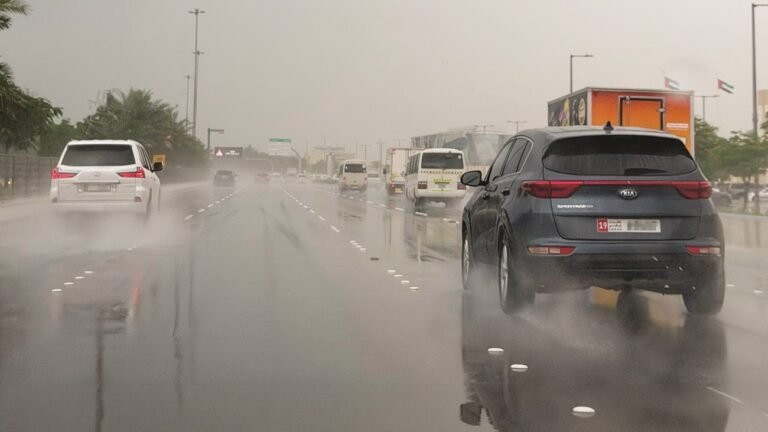
Dubai, UAE – The effects of unstable weather conditions on various regions of the UAE continued on Friday.
Various regions of the country witnessed the proliferation of cumulus clouds and the fall of rain of varying intensity, interspersed with periods of active winds that stirred dust and dirt. With a decrease in horizontal visibility in some areas.
On Thursday evening, heavy rain fell on Sharjah.
Which led to the flow of valleys that cut off Maliha Shoka Road and Sharjah Road.
In addition, rain falls in Dubai, reaching various regions of the country during the night hours.
Surface low pressure
The National Center of Meteorology expected that the weather conditions would continue until Friday, as a result of the country being affected by an extension of a surface low pressure system accompanied by a low extension in the upper atmosphere.
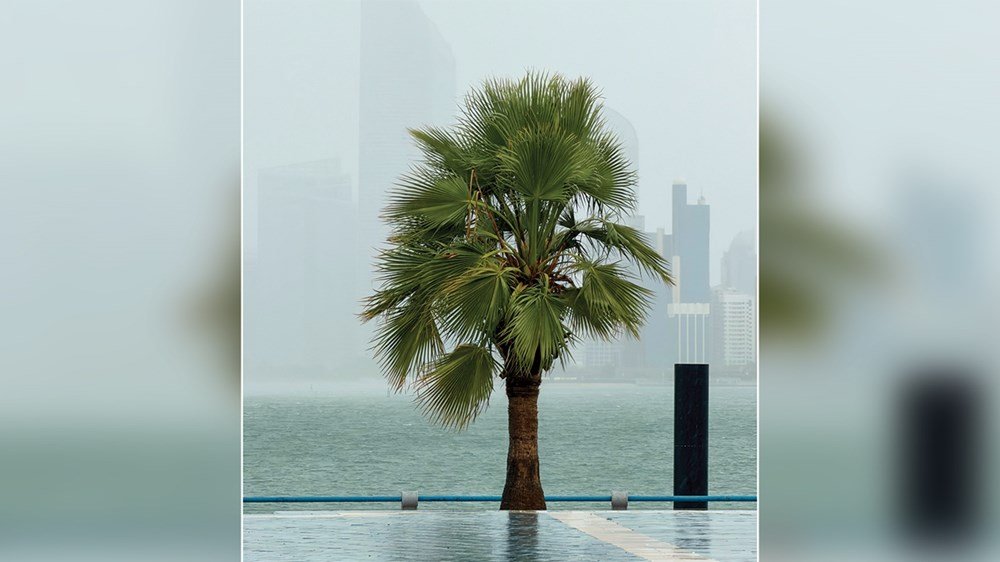
On Thursday, wind speeds reached 60 km/h at times, which led to sea turbulence in the Arabian Gulf and the Sea of Oman.
The weather is expected to remain partly cloudy to cloudy.
With the continued formation of cumulus clouds and rain falling on most regions of the Emirates, of varying intensity, accompanied by a noticeable drop in temperatures, and active to sometimes strong winds that stir up dust.
Which leads to poor horizontal visibility in some periods, in addition to sea turbulence.
gradual decline
The National Center of Meteorology expected that the state of atmospheric instability would begin to gradually decline starting Saturday.
Clear to partly cloudy weather prevails with a further drop in temperatures, while opportunities for dusty wind activity remain.
On Sunday, the weather will be clear to partly cloudy in general and cloudy at times in the west, with light to moderate northwesterly to southwesterly winds continuing, sometimes active and causing dust.
While the sea is turbulent to medium waves in the Arabian Gulf, and turbulent in the Sea of Oman.
On Monday, the weather is relatively stable, with clear to partly cloudy weather in general and sometimes cloudy in the west, with wind activity continuing at intervals.
While the sea tends to improve to be light in the Arabian Gulf, relative turbulence remains in the Sea of Oman.
Raising readiness
The relevant authorities in the country have raised the level of readiness to deal with peak weather conditions.
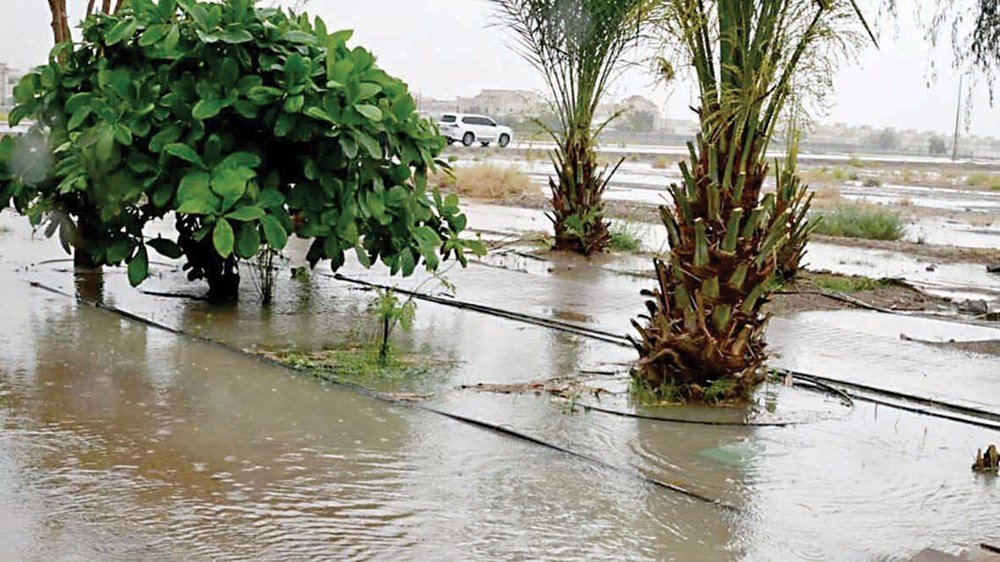
Emergency teams intensified their field deployment, monitoring water pools and ensuring smooth traffic flow.
In addition to dealing immediately with any reports.
The competent authorities also called on the public to exercise caution and care, especially while driving in light of the low horizontal visibility, and to stay away from places where water collects and flood channels.
In addition to adhering to the guidelines issued to ensure public safety.