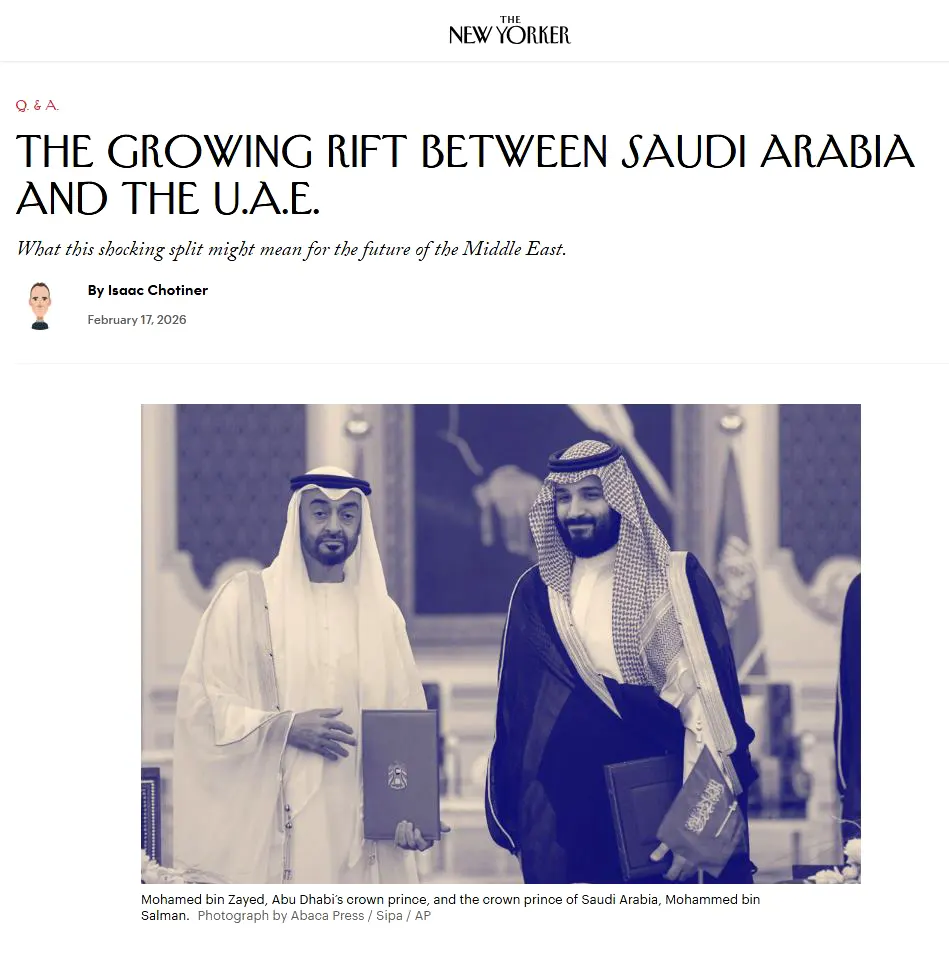
Washington, DC – A report in The New Yorker magazine highlighted what it described as a “repositioning” phase in relations between Saudi Arabia and the United Arab Emirates.
The magazine noted that the partnership between the two countries has undergone mixed developments since the rise of Saudi Crown Prince Mohammed bin Salman.
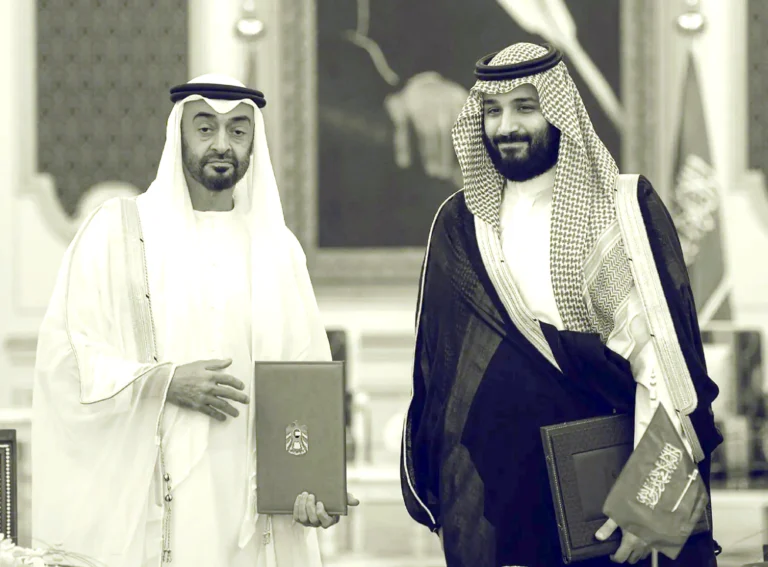
According to the report, UAE President Mohammed bin Zayed Al Nahyan played a pivotal role in the early years of Prince Mohammed bin Salman’s rise.
He was keen to promote him in Western capitals. In addition, he presented him as a serious and capable leader who could take control of decision-making in the Kingdom.
This came at a time when many Western circles had not yet formed a clear picture of him.
regional policies
The report noted that this period witnessed close alignment between Riyadh and Abu Dhabi, particularly between 2015 and 2019, with both sides adopting more proactive and assertive regional policies.
However, differences gradually emerged as Saudi military operations against the Houthis faltered. In contrast, many perceived greater Emirati success on certain fronts. Furthermore, efforts were made to counter al-Qaeda in the Arabian Peninsula.
strategic alliance
The report also addressed the economic dimension, noting that Saudi Arabia is accelerating
its efforts to attract investment and diversify its economy in sectors such as tourism and entertainment.
These are areas in which the UAE has been developing for many years.
The report also highlighted the UAE’s progress in artificial intelligence
and its extensive investments in Africa, particularly in renewable energy and infrastructure.
The report concluded that the relationship between the two countries has shifted
from a phase of complete alignment to one of more differentiated roles.
Nevertheless, cooperation continues on vital issues within the framework of a strategic alliance.
This alliance adapts to rapidly evolving regional and international dynamics.