ABU DHABI, UAE – The UAE has established itself as a global hub for food supply chains, at a time when the global food system is facing increasing challenges.
It based this on its strategic geographical location, which connects the world’s continents, and its advanced infrastructure, which includes ports, airports, and modern land transport networks, classified as among the best in the world.
In addition to adopting smart solutions that enhance the efficiency of logistics operations and contribute to supporting food security at the regional and international levels.
Logistics sector experts confirmed that the UAE, with its diverse capabilities, benefits from the current and future capabilities of logistics services for the regional and global food sector.
The size of the food logistics market in the Middle East is estimated, according to a report by Mordor Intelligence, at about 67.14 billion US dollars in 2025.
It is expected to reach US$100.59 billion by 2030, with a compound annual growth rate of 8.42% through 2030.
The UAE ranks first regionally and third globally in the Agility Emerging Markets Logistics Index, after China and India.
The “Emirates Food Cluster Economy” initiative, launched by the Ministry of Economy and Tourism, represents a qualitative leap in enabling the private sector to lead development in the areas of legislation, initiatives and projects.
This initiative works to integrate all stakeholders within an integrated system that includes farms, factories, supply chains, and retail trade.
So that challenges are dealt with with a “win-win” mentality to ensure that all parties benefit and support the country’s competitiveness.
Ports establish leadership
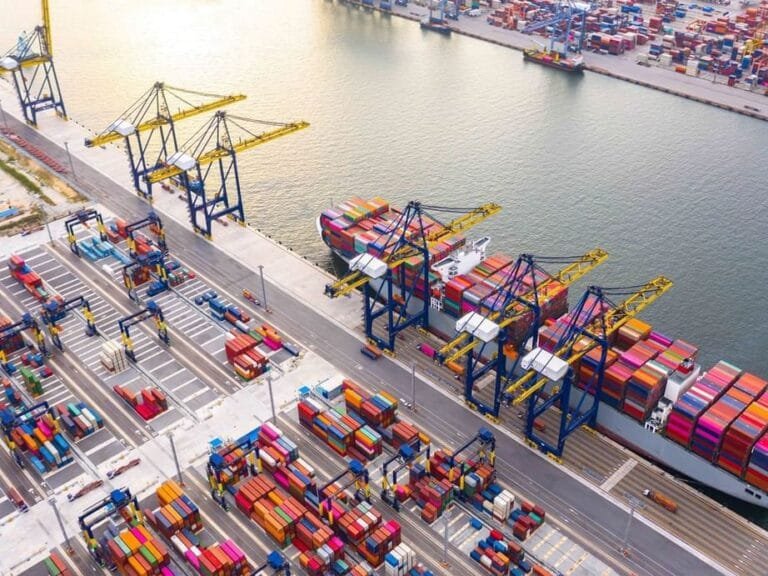
UAE ports play a major role in consolidating their leadership and strengthening their logistical position in the regional and global food sector.
For example, Jebel Ali Port handles approximately 73% of the UAE’s food and beverage trade in value, connecting companies to more than 150 ports around the world, ensuring a smooth and safe international food trade.
The Dubai Food Zone, whose technical and design details were recently revealed by Dubai World Group, enhances the position of Dubai and the UAE in the world of food chains.
It will be developed in several phases, with the first phase set to launch in 2027.
The region will provide an integrated food sector system that includes advanced refrigerated and temperature-controlled storage facilities, primary and secondary processing centers, and digital operations management solutions.
In addition to wholesale and retail facilities, and a hall dedicated to luxury food to serve both the business and consumer sectors.