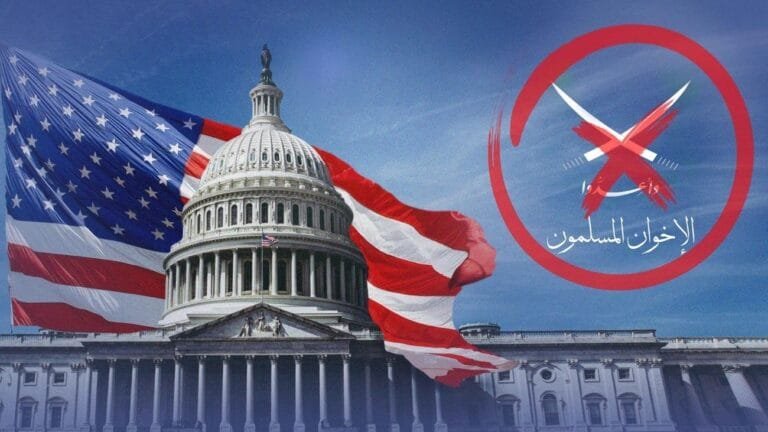
أبوظبي، الإمارات – أكدت دراسة بحثية لمركز «تريندز» للبحوث والاستشارات، أن قرار الولايات المتحدة تصنيف فروع من جماعة «الإخوان» على قوائم الإرهاب العالمية يمثِّل تحوّلاً نوعياً في مقاربة واشنطن تجاه التنظيم.
It also moves its approach from the logic of monitoring and containment to the logic of legal criminalization and institutional dismantling.
Which will reflect on the future of the group regionally and internationally.
وأشارت الدراسة الصادرة عن قسم دراسات الإسلام السياسي في مركز «تريندز» إلى إعلان وزارة الخارجية الأميركية، في 13 يناير 2026، تنفيذ الأمر الرئاسي الصادر في 25 نوفمبر 2025، بتصنيف فروع الجماعة في مصر والأردن على خلفية دعمها لحركة حماس المصنّفة منظمة إرهابية.
In addition to classifying the «Muslim Brotherhood» group – the Lebanese branch – as a foreign terrorist organization.
With the imposition of a package of punitive measures including an asset freeze and a ban on dealing with entities and individuals associated with the group within the United States.
In addition to preventing the entry of its members who do not have American citizenship, and the possibility of deporting those on American soil.
She explained that the US decision is based on multiple legal powers, most notably the Immigration and Nationality Act.
In addition to the Anti-Terrorism Act of 1987, and the Treasury Department’s mechanisms for listing entities on lists of «Specially Designated Global Terrorists».
This gives the authorities broad powers to freeze assets and ban financial transactions.
The study also indicated that the decision comes in an internal American context to end the debate over how to deal with the group, and in an external context to enhance national security, protect American interests and its allies in the Middle East, and dry up the intellectual and organizational environment on which political Islam movements are based.
The study showed that the decision will affect the group’s trans-state organizational structure, by dismantling networks, reducing the group’s ability to move and reposition, and increasing restrictions on the institutions and interfaces associated with it in the United States, which will weaken its political, social, and economic activity.
The study added that the decision will undermine the economic and financial capabilities of the organization by freezing assets and preventing any financial or commercial transactions.
It will also affect the group’s symbolic legitimacy and its legal and moral discourse, especially in light of internal divisions, the decline of its image among new generations, and the link between its activities and violent practices.
three scenarios
Regarding future repercussions, the study explored three possible scenarios for the group: a limited repositioning in environments less subject to US oversight.
Or the shift to non-public network work, or the acceleration in the path of internal and organizational erosion.
Which weakens its ability to influence locally and internationally.
The study concluded by emphasizing that the American decision does not represent an immediate end to the Muslim Brotherhood «group».
But it establishes a new phase that undermines the historical conditions for its survival as a cross-border organization, and places it before a difficult equation between a radical shift in structure and discourse, or continuing on the path of contraction and withdrawal.
Which makes the presence of the organization have limited influence on regional and international political equations.