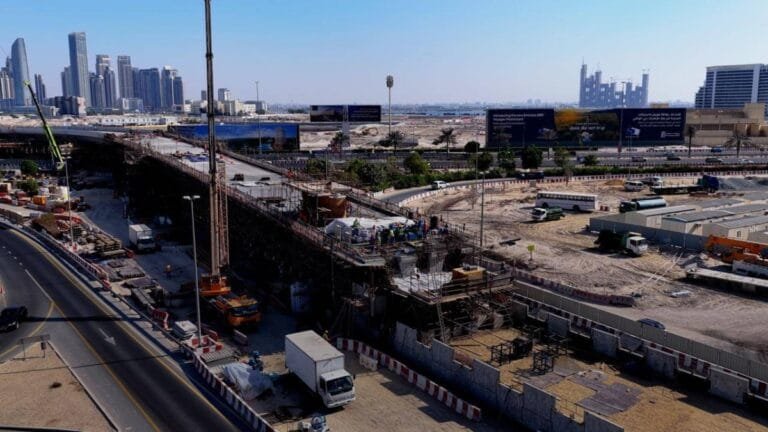
Dubai, UAE – The Roads and Transport Authority announced the completion of 60% of the total development project for Oud Maitha and Al Asayel Streets as part of the Sheikh Rashid Axis development project.
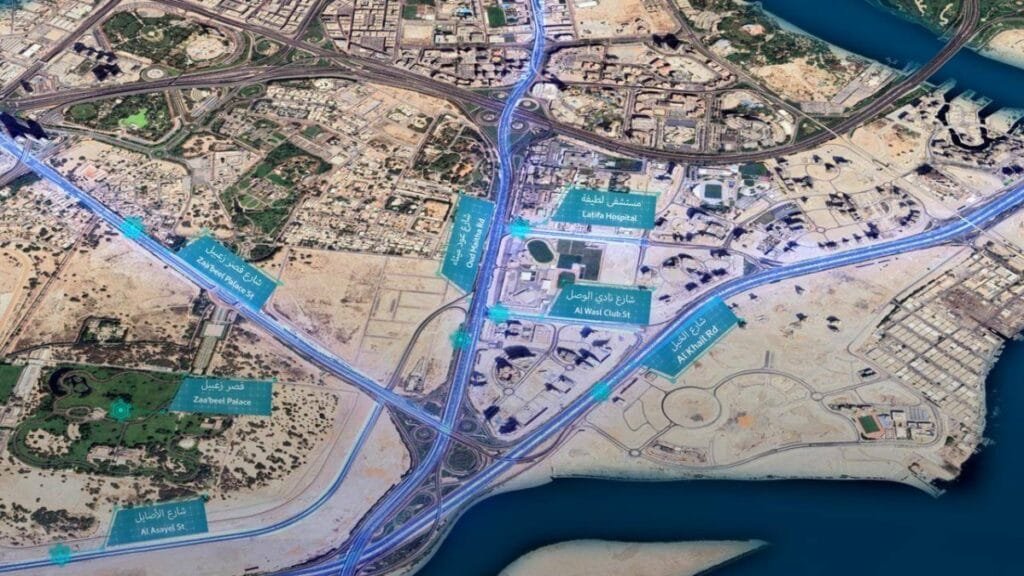
This project contributes to linking Al-Asayel Street to Al-Khail Street, passing through Al-Wasl Club Street, while providing an exit leading to Oud Maitha Street and Al-Wasl Club Street.
It also includes the development of four main intersections, including the implementation of 4,300-meter-long bridges and 14-kilometre-long roads.
In addition to serving more than 420,000 people in 2030.
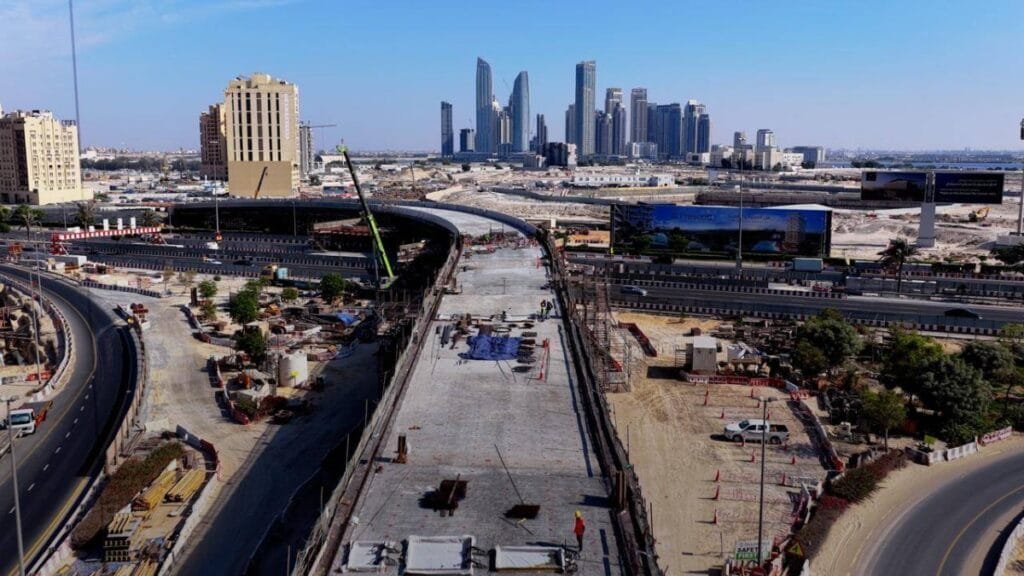
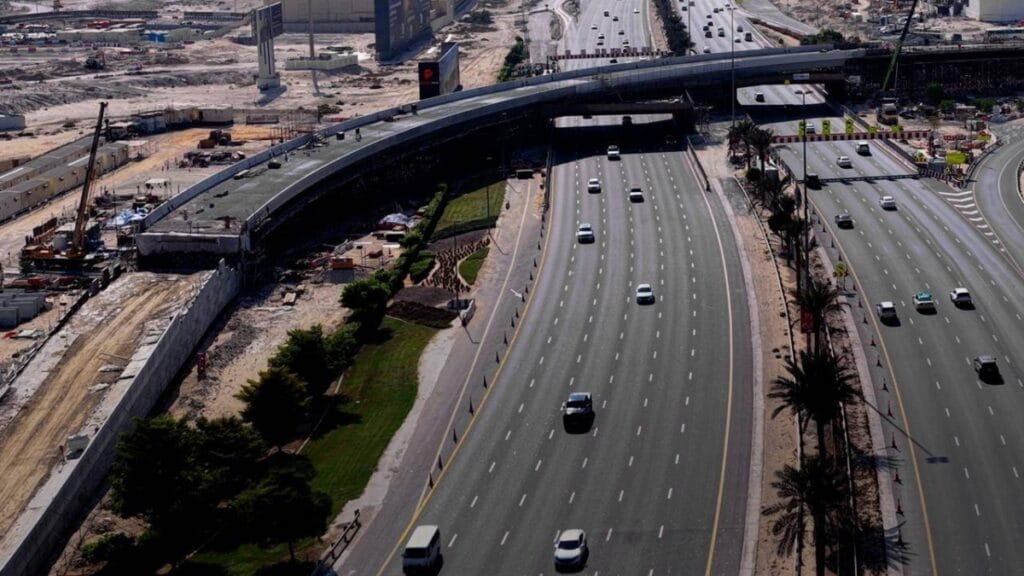
The company implementing the project has completed 70% of the bridge work that serves traffic coming from Al-Asayel Street to Al-Khail Street in the north towards the commercial crossing.
Work is being completed in preparation for its opening in the first quarter of this year.
The company has also completed approximately 60% of the construction work on the tunnel, which serves traffic coming from Dubai Al Ain Street towards Al Wasl Club Street.
Other road and bridge expansions are also being completed, and are expected to open in the third quarter of this year.
main intersections
His Excellency Matar Al Tayer, Director General and Chairman of the Board of Directors of the Roads and Transport Authority, said: “The project to develop Oud Maitha and Al Asayel Streets comes in implementation of the directives of the wise leadership (may God protect it), to complete the development of the Sheikh Rashid Axis, to accommodate the needs of urban development and population growth, and is considered one of the most important projects for developing the infrastructure of the road network”. It includes the development of four main intersections, including the construction of 4,300-meter-long bridges and 14-kilometer-long roads. The project serves a number of service, residential and development areas, the most important of which are Zabeel, Al-Jaddaf, Oud Maitha, Umm Hurair, Latifa Hospital, and Al-Wasl Club. The population of the areas served by the project is expected to reach more than 420,000 people in 2030.
He pointed out that the project contributes to increasing the capacity of Oud Metha Street from 10,400 vehicles per hour in both directions, to 15,600 vehicles per hour in both directions.
This is an increase of up to 50%, and it also contributes to reducing flight time from 20 minutes to 5 minutes, with an improvement of 75%.
first intersection
The project includes the development of four main intersections: the intersection of Oud Maitha Street and Sheikh Rashid Street.
It includes adding a path to the left turn slope for traffic coming from Oud Maitha to Sheikh Rashid Street towards Al Garhoud Bridge.
This is with the aim of increasing the capacity to 1,800 vehicles per hour, and improving the service road on Sheikh Rashid Street between the current bridge and the exit from Al Zahrawi Street.
second intersection
The project also includes developing the intersection of Oud Maitha Street with Al Asayel Street and Al Wasl Club.
This is done by constructing two bridges linking Al-Asayel Street to Al-Khail Street, passing through Al-Wasl Club Street.
Third intersection
The project also includes developing the intersection of Al Wasl Club Street and Al Khail Street.
This is achieved by constructing a two-lane bridge that serves traffic coming from Al-Asayel Street to Al-Khail Street towards the Business Bay crossing, with a capacity of 3,000 vehicles per speed.
In addition to developing Al Wasl Club Street, by increasing the exit capacity towards Al Khail Street to two lanes.
In addition to implementing a service road on Al Wasl Club Street in both directions, and providing parking for vehicles.
Fourth intersection
The development of the intersection of Qasr Zabeel Street with Al Khail and Oud Maytha Streets includes the implementation of an additional path on the left turn slope for traffic coming from Al Khail Street to Dubai Street – Al Ain.
This contributes to increasing the capacity from 900 vehicles per hour to 1,800 vehicles per hour.
In addition to implementing a vehicle tunnel with a capacity of one track and a capacity of 1,200 vehicles per hour.
It also serves traffic coming from Dubai-Al Ain Street to Al Wasl Club Street, and contributes to solving the current problem of traffic interference.