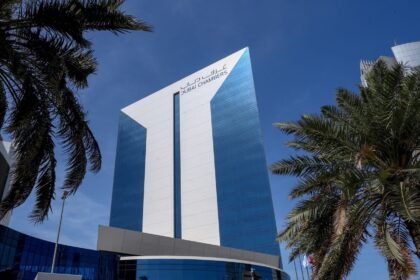
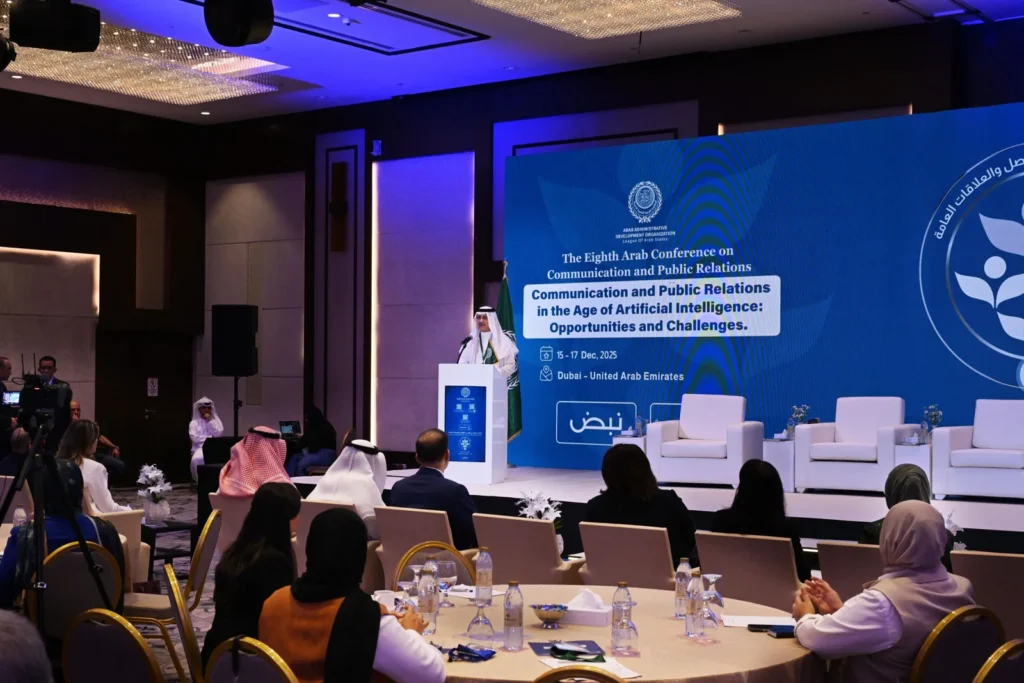
Dubai, United Arab Emirates – The 8th Arab Conference on Communication and Public Relations concluded its work in Dubai,
after two days of rich discussions under the theme “Communication in the Age of Artificial Intelligence”.
The participants concluded that it is necessary to adopt innovative strategies to employ artificial intelligence technologies in corporate communication,
in order to keep pace with the rapid digital transformations taking place in the world.
A platform for exchanging experiences and visions
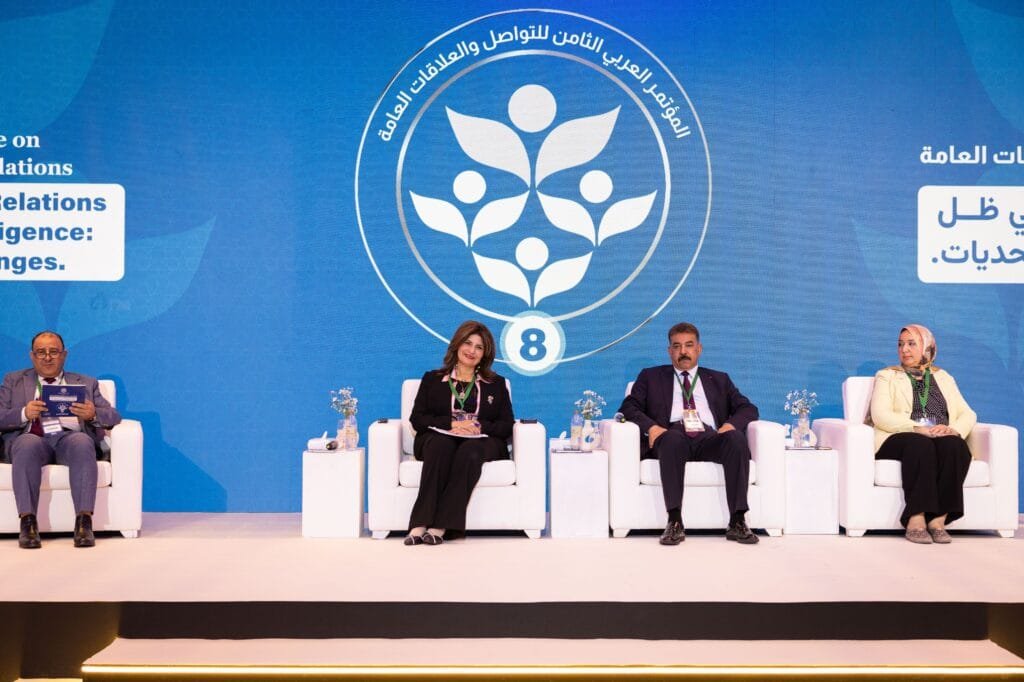
The conference witnessed a remarkable attendance of elite academics and experts from various Arab countries;
The sessions focused on analyzing the impact of artificial intelligence
on public relations practices, highlighting the ethical and legal challenges.
Furthermore, the conference reviewed leading Arab experiences in this field,
addressing the role of digital influencers in promoting institutional sustainability and developing modern communication tools.
Governance and transparency: a top priority
In concluding its work, the Arab Organization for Administrative Development stressed the importance of the outcomes achieved.
Foremost among these is setting strict standards to regulate the use of artificial intelligence within institutions.
With absolute emphasis on the principles of credibility and accountability.
Accordingly, the recommendations included formulating comprehensive
policies for data governance and privacy protection.
This is in addition to adopting multi-stage monitoring mechanisms
for the work of influencers that ensure the protection of intellectual property rights.
Capacity building and scientific research
On the other hand, the conference did not overlook the human aspect;
it stressed the need to hone the digital skills of workers in the communications sector.
This is done through specialized training programs in critical thinking
and the creation of technically supported content.
In parallel, the conference called for increased cooperation
between academic and governmental bodies to conduct applied research.
It invests in developing artificial intelligence solutions that support the Arabic language,
while respecting the cultural specificity of the region.
In conclusion, the participants recommended preparing a “unified Arabic guide” for the uses of artificial intelligence,
This is to serve as a reference that ensures the leadership of Arabic content in light of modern digital transformations.