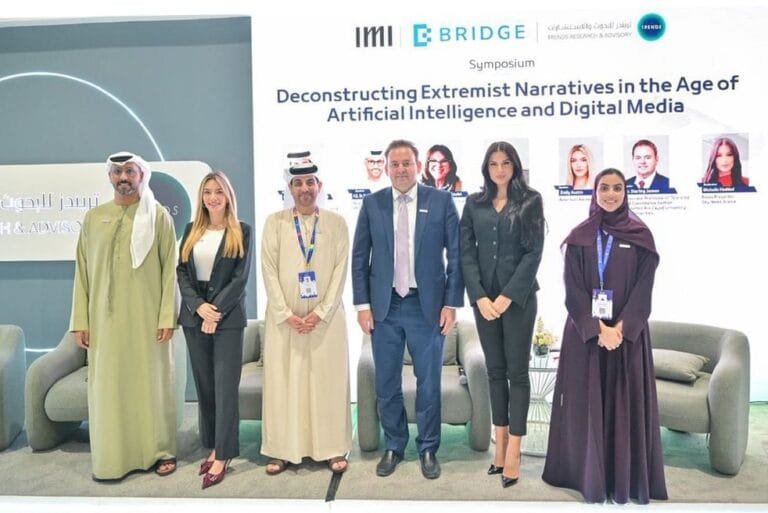
Abu Dhabi, UAE – The Trends Center for Research and Consulting, in cooperation with the International Media Investment Company IMI, organized an international symposium entitled “Deconstructing extremist narratives in the era of artificial intelligence and digital media”.
This was attended by a group of experts, academics, and specialized media professionals, as part of his participation in the Bridge 2025 Summit.
In his opening remarks at the symposium, Dr. Mohammed Abdullah Al-Ali, CEO of the Trends Center, emphasized that extremism is no longer based on direct interaction.
Rather, it has become dependent on hidden digital spaces that are difficult to monitor.
He explained that extremist groups now possess an unprecedented ability to segment content and direct it towards precise segments.
Especially young people and users of short content.
He pointed out that Trends is working to employ scientific knowledge to dismantle extremist discourses and formulate alternative narratives that promote the values of peace and moderation.
He also appreciated the efforts of international partners and participants in the symposium.
He added that confronting this soft extremism requires multiple arms, including education, media, legislation, and research analysis.
etc.. He stressed that building public intellectual immunity is the most important long-term solution.
The session witnessed the participation of a number of speakers who provided in-depth analytical insights into the danger of the development of extremist narratives in the environment of artificial intelligence and digital communication, and presented a set of strategic solutions to confront them.
Speakers discussed the need to integrate narrative analysis mechanisms with artificial intelligence, and adopt comparative methodologies to monitor the development of extremist content over time.
In addition to developing models capable of predicting diffusion movements and levels of impact.
The session came out with recommendations that included the importance of enhancing cooperation between think tanks and international technology companies.
In addition to building specialized cognitive monitoring networks that track misleading narratives, and producing educational curricula that stimulate critical thinking rather than negative reception.
In addition to developing interactive initiatives targeting youth in digital gaming environments, short content, and artificial intelligence platforms.