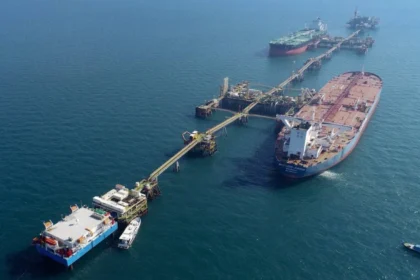

Tehran, Iran – The Strait of Hormuz, the world’s most important waterway for energy trade, witnessed a dangerous escalation on Saturday. Reuters reported hearing gunfire as two ships attempted to transit the strait. This incident came just hours after Iran officially announced the re-closure of the strait and declared a return to a system of “full military control.”
Gunshots ring out in the waterway
Reuters quoted informed maritime sources as saying that gunfire was clearly heard after two ships set sail to cross the strait. This move came as a challenge to new restrictions imposed by the Iranian armed forces. No further details have yet been released regarding the identity of the two vessels or whether the incident resulted in any injuries or damage. However, the timing of the incident suggests a state of high tension and heightened military readiness among the parties involved in the region.
Return to “military control”
The Iranian military command had announced earlier on Saturday the cancellation of the decision to open the Strait of Hormuz to maritime traffic. It declared a return to the previous state of strict control. Tehran justified this move as a response to what it described as the continued “intensified US naval blockade.” It asserted that repeated violations of international and national maritime rules in the region had occurred. Ebrahim Zolfaghari, spokesman for the Khatam al-Anbiya Central Headquarters of the Armed Forces General Staff, stated that passage through the Strait of Hormuz had officially reverted to its previous state of “complete military control.”
He explained that this measure was taken to defend “Iranian national sovereignty” and protect the strategic interests of the Islamic Republic. This comes amidst increasing economic and military pressure from Washington.
Energy artery in the wind
This escalation jeopardizes the recent ceasefire agreement and threatens to disrupt global oil flows, on which millions around the world depend for stability.
Observers believe that the latest shooting incident could be the spark that ignites a direct confrontation once again in the Gulf waters. This is especially true given Washington’s insistence on guaranteeing “freedom of navigation” and Tehran’s insistence on exercising its full military sovereignty over the Strait in response to the blockade.