Kuwait – The Kuwait Petroleum Corporation (KPC) announced Friday morning that the Mina Al-Ahmadi oil refinery was targeted in a new drone attack, marking the second such security incident in 24 hours. The Kuwait News Agency (KUNA) confirmed that the attack caused a fire in some of the refinery’s operational units. Fire and emergency teams immediately began working to contain the blaze and prevent its spread.
Details of the attack and the field situation
Initial reports from the scene indicate no casualties from the attack, which forced the temporary shutdown of several production units to ensure the safety of the facility and its employees. This attack comes just hours after a similar drone attack on the refinery on Thursday. In response, the Kuwaiti Armed Forces declared a state of alert and confirmed that air defenses are effectively countering “missile and drone threats” targeting vital installations.
Strategic weight and a long history
The Mina Al-Ahmadi refinery, located 45 kilometers south of Kuwait City and overlooking the Arabian Gulf, is the largest and most important of the three refineries owned by the Kuwait National Petroleum Company (KNPC).
The refinery was established in 1949 during the reign of Sheikh Ahmad Al-Jaber Al-Sabah, initially with a modest refining capacity of 25,000 barrels per day to meet domestic demand.
With the restructuring of the oil sector in 1960, its ownership was transferred to KNPC. Subsequently, it underwent significant development, bringing its total area to approximately 10.5 million square meters today.
The “environmental fuel” boom and global standards
The refinery underwent a radical transformation in 2022 with the launch of the Clean Fuels Project, ushering in a new era for Kuwait’s oil industry. Thanks to the modernization of 39 production units, the refinery’s capacity increased to 346,000 barrels per day.
This project enabled Kuwait to produce high-quality, environmentally friendly petroleum products that meet stringent international standards such as Euro-5, characterized by low sulfur and pollutant levels. This, in turn, enhanced the competitiveness of Kuwaiti products in global markets.
Operational flexibility and export capabilities
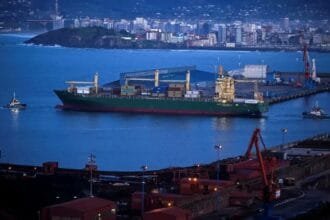
The Ahmadi refinery boasts advanced marine facilities capable of simultaneously loading four Very Large Crude Carriers (VLCCs) for the export of crude oil, sulfur, and refined products. The refinery plays a vital role in meeting domestic demand for low-sulfur gasoline, kerosene, and bitumen, demonstrating a high degree of flexibility in responding to market fluctuations. Observers believe that the repeated targeting of this critical facility poses a direct threat to energy security, given its status as one of the most efficient and reliable refineries in the region. Meanwhile, authorities continue to assess the damage caused by Friday’s attack. Security measures have also been tightened around all strategic oil sites to ensure the continued flow of supplies and protect national assets.