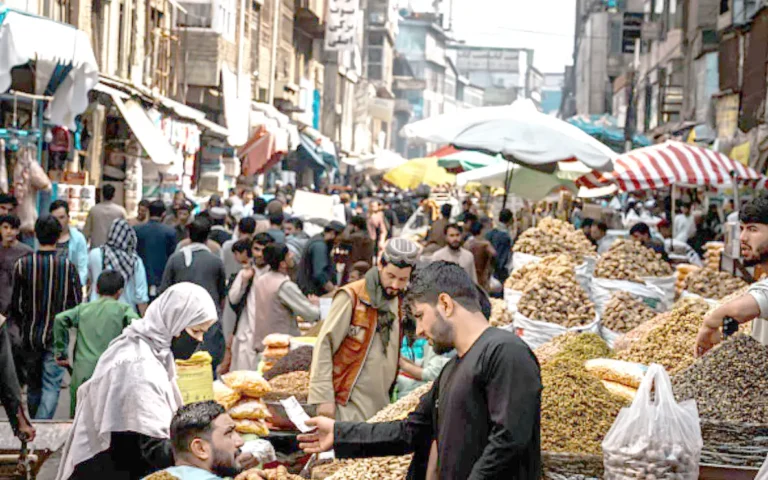
In recent days, a number of residents of the Afghan capital, Kabul, have complained about the varying prices of gas in different parts of the city.
They argued that the lack of oversight and the shortcomings
of the Taliban authorities allowed gas companies and traders to set prices arbitrarily.
Residents explained that the price of a gas cylinder starts from 54 Afghanis.
In some areas, it may reach 58, 60, and even 65 Afghans.
Inequality represents a significant burden
Speaking to the newspaper “8 Sabah”, residents in Kabul said that
this price disparity represents a heavy burden on them with the onset of the cold season.
Especially given the difficult economic situation that many are experiencing this year.
They added that rising prices are affecting their ability to heat their homes and cook food.
Prices continued to rise daily even before the arrival of the extreme cold.
The newspaper quoted the voices of those affected, including Sheikh Qasim,
a resident of the banking district in the sixth district.
He is disabled and has difficulty moving.
Lack of official oversight
Qasim confirmed that he has to walk for hours to the Kota Sangi market
to buy gas at a cheaper price, five Afghanis less than the price in his neighborhood.
He explained that the price of a gas cylinder in his neighborhood is 60 Afghanis,
while it is sold in the Kota Sangi market for 52 Afghanis.
Despite the difficulty of moving around due to his disability,
Qasim continues this effort to provide some expenses for his family.
Kabul residents point to the need to provide basic necessities such as gas,
This, coupled with price discrepancies, has become a daily burden on families,
and the absence of official oversight is exacerbating the situation.
Tighter supervision
Some have also warned that the continuation of these practices
could lead to further social discontent.
Especially with the increasing demand for gas
as temperatures gradually decrease.
Kabul residents are demanding that the relevant authorities tighten
control over gas prices and ensure fair distribution to suppliers.
This is to ease the burden on families struggling to meet their basic needs during the winter season.