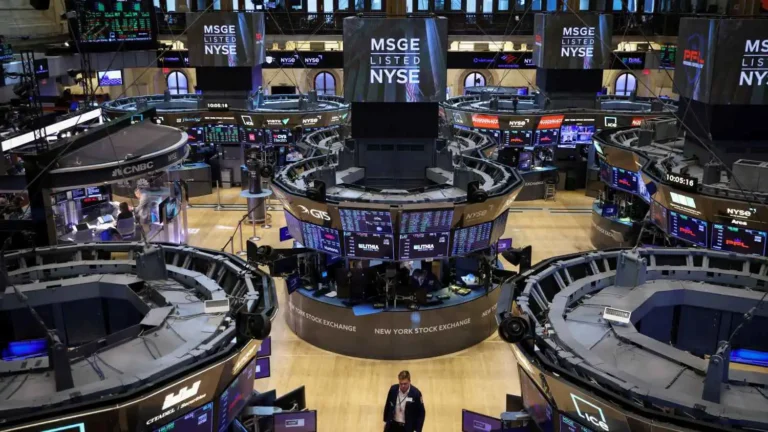
Washington, DC – Escalating military tensions and the ongoing conflict with Iran have thrown global financial markets into turmoil, driving investors and market makers into an unprecedented state of apprehension and risk aversion. At the same time, the complex landscape has made day trading a daunting and costly endeavor. This comes amid close scrutiny from international regulators who fear losing control over the stability of the financial system.
Cracks in the pillars of the global economy
Investors and traders confirmed that the repercussions were not limited to a single sector, but rather struck at the very foundations of the global economy, from US Treasury bonds, the traditional “safe haven,” to gold and major currencies.
In Europe, the crisis was exacerbated by the actions of hedge funds, which currently dominate bond trading. These funds rushed to liquidate their positions en masse this month, leading to sharp price movements and liquidity gaps. Market experts indicate that obtaining accurate quotes or executing large deals has become extremely difficult over the past four weeks. In this context, Rajiv de Mello, Chief Investment Officer at Gamma Asset Management, says, “When we try to trade, it takes longer, as market makers urge us to be patient and break down large trades into smaller ones to avoid sharp price fluctuations.” He explained that the widening bid-ask spread has forced everyone to reduce their investment positions.
Indicators of anxiety exceed levels of previous crises
Anxiety indicators have surpassed previous crisis levels. Volatility in the oil, gold, and stock sectors has surged to levels seen only at the height of major crises. Even the two-year US Treasury note market, a cornerstone of global finance, saw its bid-ask spread widen by 27% in March compared to February, according to Morgan Stanley data. This wave of turmoil is reminiscent of past extreme conditions, such as Trump’s “Liberation Day” tariffs in 2025 or the COVID-19 pandemic in 2020. However, the current risk lies in the fact that this volatility follows a prolonged period of expansion. This foreshadows a sharp price correction if the trade war drags on and liquidity evaporates completely.
Hedge funds and European lobbying
In Europe, liquidity in the interest rate futures market reached as low as 10% of its usual levels at some critical moments.
Daniel Axan of Morgan Stanley noted that the lack of liquidity was reminiscent of the early days of the pandemic. Hedge funds play a dual role; they provide liquidity in good times. However, their rush to exit losing positions (such as betting on an interest rate cut by the Bank of England) exacerbated the crisis.
Regulatory warnings and future risks
Three European regulatory bodies have warned that geopolitical tensions, particularly the war in the Middle East and disruptions to Gulf oil supplies, pose “serious risks” by driving up energy prices and fueling global inflation.
While trading remains technically “normal,” the scarcity of buyers and the mass flight to cash are putting the financial system to a severe test that could reshape the global investment landscape in 2026.