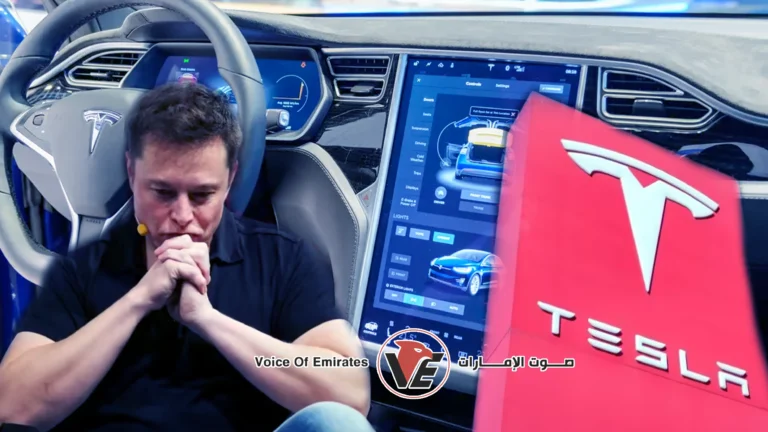
California, USA – Tesla is facing one of its most complex legal crises in the United States, following an official acknowledgment of flaws in the way it promotes self-driving systems.
This admission opened the door to regulatory investigations and lawsuits accusing the company of misleading consumers.
This concerns the true capabilities of its cars, which puts its technical reputation at stake.
Marketing terms that clash with reality
According to the Associated Press, the California Department
of Motor Vehicles concluded that Tesla used terms such as “autopilot”;
“Full Autonomous Driving” (FSD) gives users the illusion that cars
are capable of driving without any human intervention.
However, the current technological reality confirms that these systems still require constant monitoring,
which regulatory bodies consider to be marketing deception that warrants accountability.
Final deadline and threat of license revocation
In a related context, the Wall Street Journal reported that the California
regulator had given the company a deadline to amend its advertisements.
Accordingly, authorities warned that non-compliance could lead to
the temporary suspension of Tesla’s license to sell cars within the state.
Which represents the largest market for electric cars in America, which could cause the company huge financial losses.
Tesla’s defense and the rise of class-action lawsuits
For its part, Tesla admitted that the language in the advertisements was not precise enough.
However, she stressed at the same time that the user manual requires the driver to be vigilant.
Simultaneously, class-action lawsuits are mounting, accusing the company of excessive marketing;
Prosecutors link this marketing approach to the occurrence of tragic traffic accidents.
CNBC also noted that investigations have begun to extend to Elon Musk’s controversial statements.
This is about the near-complete elimination of the human element.
The future of artificial intelligence in the automotive sector
In conclusion, experts believe this case could set a regulatory precedent
that will change the rules of the game in the smart car sector.
Therefore, the US authorities’ move towards tightening control
will mean the end of the era of “unproven technical claims”.
This will ensure user safety and impose stricter standards on technology companies in the future.