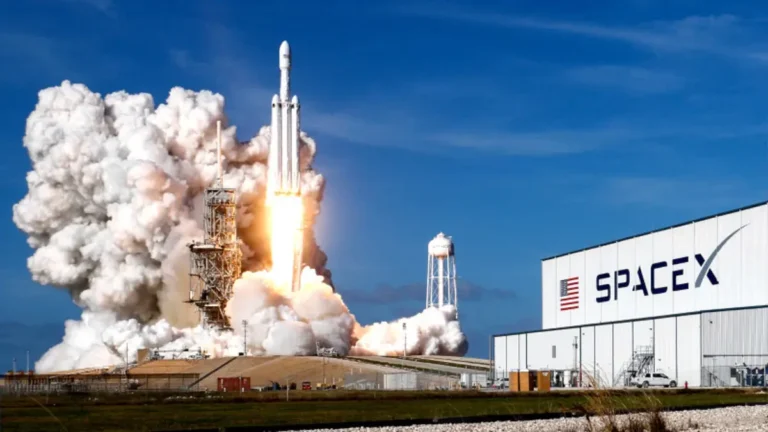
New York, USA – Elon Musk’s SpaceX has revealed its plans to prepare for an initial public offering (IPO) next year. Its current valuation is estimated at approximately $800 billion (roughly 1,182 trillion South Korean won), according to international news reports.
A share purchase transaction determines the value
According to Reuters, SpaceX Chief Financial Officer Brett Johnson announced in a letter to shareholders on December 12 that the company had reached an agreement with investors. The agreement includes the purchase of up to $2.56 billion worth of shares from internal shareholders at a price of $421 per share.
Based on this agreement, Reuters indicated that SpaceX’s current market value is $800 billion.
Targeting IPO in 2026
In his letter, Chief Financial Officer Johnson confirmed that the company is aiming for an IPO next year. However, he clarified that the timing and final valuation remain uncertain, depending on market conditions and the company’s performance.
Johnson stated: “We are preparing for an initial public offering that could take place in 2026. If we execute it well and market conditions are favorable, we believe we will be able to raise significant funds through the listing.”
Plans to fund massive space expansions
Johnson outlined the planned uses for the funds raised through the IPO. These uses are heavily focused on the company’s ambitious future projects, particularly expanding its Starship vehicle launches.
Building an artificial intelligence data center in space, establishing a lunar base called “Alpha,” and continuing the exploration of manned and unmanned Mars.
Ambition for the largest IPO in history
Previous reports from media outlets such as Bloomberg and Reuters indicated that SpaceX might be planning an IPO valued at up to $1.5 trillion. It also aims to raise more than $30 billion. If an IPO of this size is achieved, it would surpass the previous world record set by Saudi Aramco in 2019, which raised approximately $29 billion.
SpaceX is currently the second most valuable unlisted startup in the world, after OpenAI, the developer of ChatGPT.